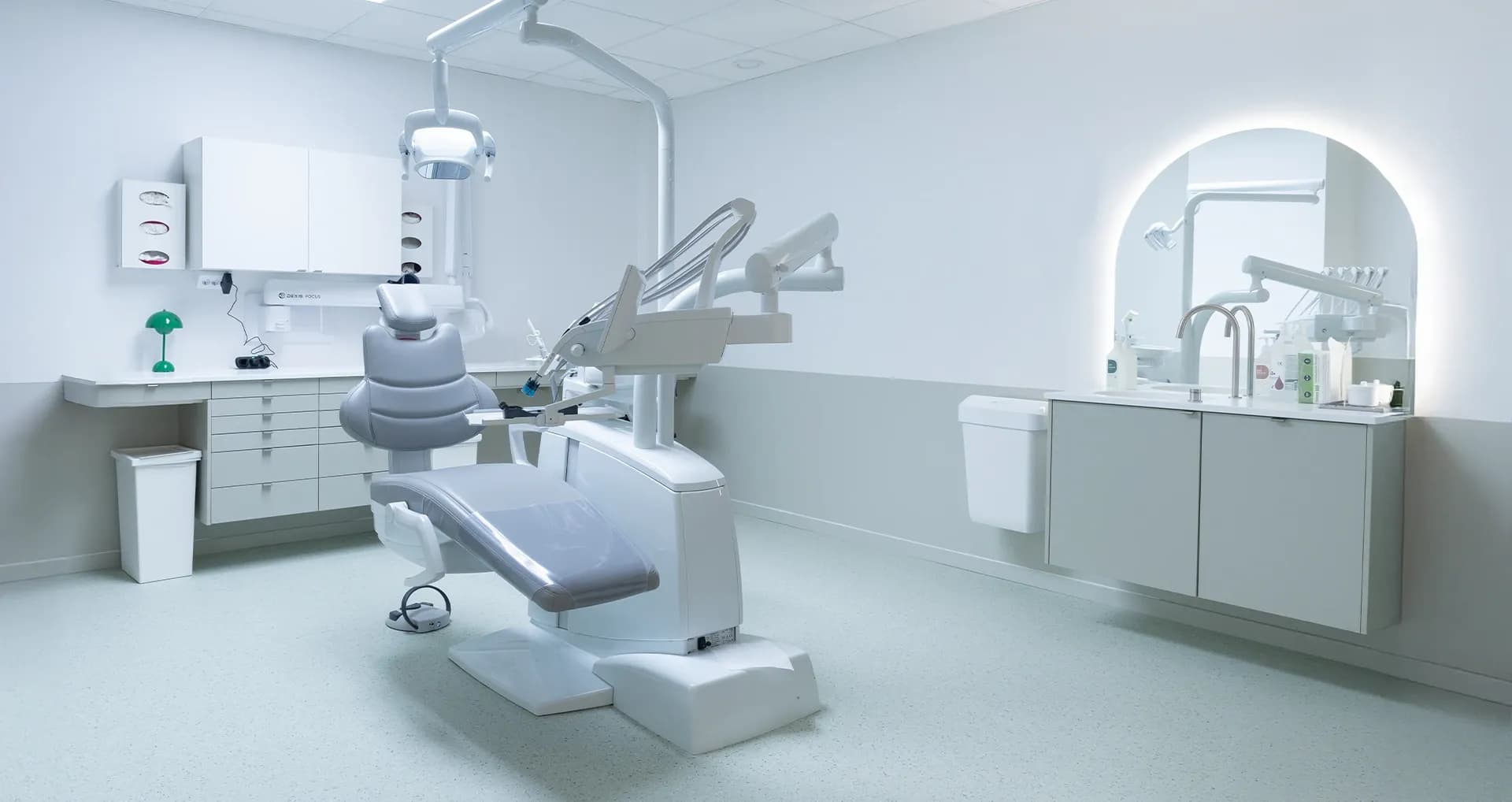
The teeth at the back of each jaw are called wisdom teeth. They usually erupt in late adolescence or early adulthood, and can sometimes cause problems. At Dentme, you will meet experienced dentists who will make your treatment safe, thorough and as painless as possible.
"We focus on making the extraction as thorough and gentle as possible - always with patient safety at the center"
- Erik Dentist at Dentme
When does a wisdom tooth need to be removed?
Wisdom teeth are the last teeth to emerge, usually between the ages of 17 and 25. Sometimes they grow crooked or get partially stuck in the gums, which can lead to problems. Common reasons whya wisdom tooth must be removed is:
- Recurrent inflammation of the gums (pericoronitis)
-Caries in the wisdom tooth or adjacent teeth
- Pressure on other teeth causing crowding
- Cysts or changes in the jawbone
- Difficulty keeping clean - increases the risk of infection
Wisdom teeth in the lower jaw are more likely to cause problems than those in the upper jaw.
How do I know if my tooth needs to be removed?
The dentist will carry out a clinical examination and take X-rays to assess the position of the tooth, the shape of the roots and the proximity of nerves. In some cases, extraction is recommended even before problems occur, to prevent complications.
How to extract a wisdom tooth
Examination and planning
The dentist analyzes X-rays and plans the procedure. It will be decided whether it is a simple extraction or whether a surgical procedure is needed.
Stunning
Treatment is always carried out under local anesthesia. In case of anxiety, sedatives may be offered. All procedures are performed under sterile conditions.
Extraction
The tooth is removed with special tools. If it is deep or has crooked roots, it may need to be split before it is removed. Surgical extraction is performed by an experienced dentist or oral surgeon.
After treatment
The wound is cleaned and stitched if necessary. You will receive clear instructions for aftercare and pain relief. A return visit can be booked to check healing.
After the procedure - what to consider
Most people recover within a few days. Common recommendations:
- Avoid eating for the first two hours
- Do not chew on the treated side for the first 24 hours
- Avoid smoking and snus for at least 24 hours
- Do not rinse your mouth vigorously for the first 24 hours
Pain, swelling and slight bleeding are normal. Over-the-counter painkillers are usually sufficient.
Oral hygiene and healing
- Brush gently around the area
- Use antibacterial mouthwash only if your dentist recommends it
- Avoid poking the wound
- The wound usually heals within 1 to 2 weeks - longer for surgery
Common complications - what is alveolitis?
One of the most common complications is alveolitis, also known as 'dry socket'. It occurs when the blood clot in the wound breaks off too early. It can cause:
- Increased pain after 3-5 days
- Bad taste or smell in the mouth
- Radiating pain to the ear or jaw
alveolite is easily treated at the dentist with wound irrigation and pain relief. Contact us if you experience any problems.
When should you contact the dentist?
You should get in touch if you experience:
- Increased pain after a few days
- fever
- Persistent bleeding
- Difficulty opening your mouth
- Bad smell ortaste in the mouth
Prompt treatment reduces the risk of sequelae.
Frequently asked questions about wisdom teeth
Is wisdom tooth treatment included in my Membership?
Yes, it is. Examination and assessment are always included. Removal of simple wisdom teeth is included in your Membership. More severe conditions may sometimes require referral to an external specialist in oral surgery, this is not included in your Membership.
Does it hurt to pull out a wisdom tooth?
No, the procedure is done under local anesthesia. Some soreness may occur afterwards.
How long does it take to recover?
Most people recover within 7-14 days. In the case of surgical extraction, it may take longer.
How do I know if I need to remove my wisdom tooth?
If you have recurrent inflammation, pain or difficulty keeping clean, a dentist should carry out an assessment.
What is a surgical wisdom tooth extraction?
This involves removing the tooth, often in parts, under local anesthesia. It is required if the tooth is deep or difficult to access.
How to prevent problems with wisdom teeth?
Regular dental check-ups and good oral hygiene are important. However, some problems cannot be completely prevented and require action.
Can I get a fever after extraction?
Mild fever may occur. In case of persistent fever or general malaise, contact your dentist.
How quickly can I get an appointment at Dentme?
We offer quick appointments for both emergency and planned extractions. Membership gives priority access to treatment.
Sources:
Sveriges Tandläkarförbund - Extraction of wisdom teeth
https://www.tandlakarforbundet.se/

Framtidens tandvård är här!
Book a visit